Our fitness center features a heated indoor pool and whirlpool, with a full-time lifeguard on duty. (Your children and grandchildren are welcome!) Our personal trainer will help you create a personalized fitness plan, and our weekly classes, from Tai Chi and Zumba to yoga, balance, and water aerobics, will keep you in top condition.

Dining in style: Creating a recipe for success
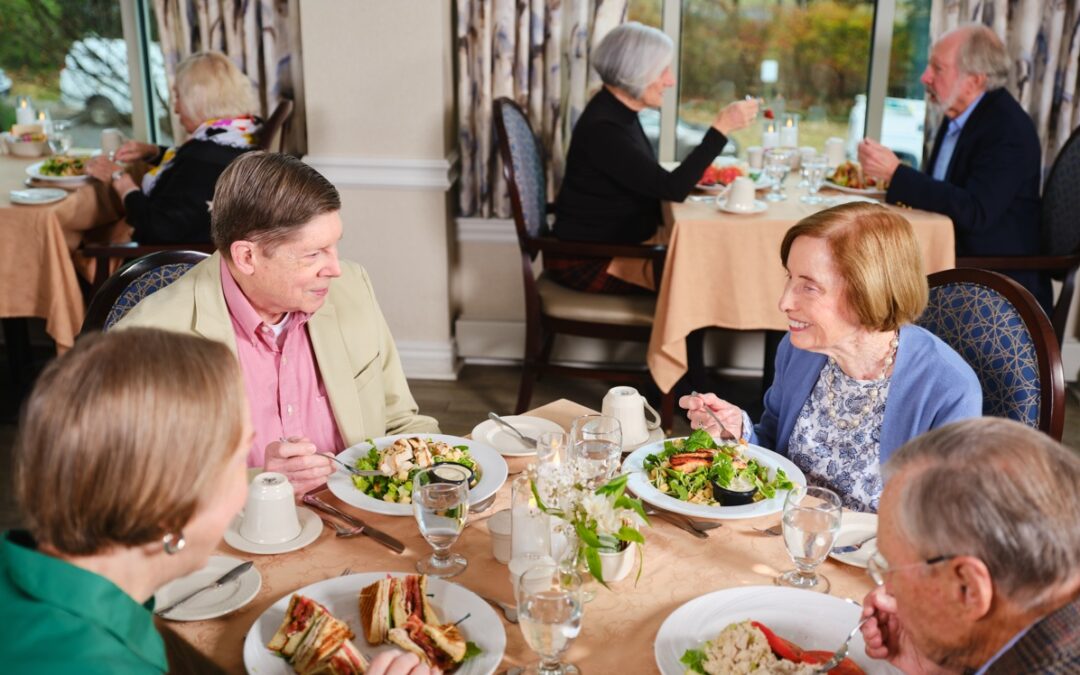
Fancy cuisine. Farm-to-table fare. Full-service restaurants.
When it comes to food, progressive retirement communities are delivering a five-star experience.
Let’s look at the trends:
1. Providing plentiful choices
A description of today’s typical resident reads like this: well-educated, well-traveled, with exacting expectations. Forward-thinking communities are eager to please by offering residents excellence in every aspect of retirement living, starting with food.
Gone are the days of ho-hum meals in cafeteria-like settings. Menus today span the gourmet gamut, from baked Dijon salmon to falafel with cucumber sauce, French apple tart to double chocolate soufflé. In leading-edge retirement communities, gluten-free, vegetarian, and vegan selections are available daily, along with seasonally fresh fruits and vegetables, locally sourced. Communities with large ethnic populations offer menu options that follow cultural traditions.
2. Creating an experience
Retirement communities are designing not only new menus, but new mealtime experiences.
Stylish dining rooms provide an elegant ambiance, with meal orders taken at tableside and delivered in courses. Other locales, like cafes and bistros, feature extended hours and casual dining. Interactive food stations serves up customized selections on the spot, from made-to-order omelets to build-your-own pizza.
3. Hiring top chefs
Retirement communities are seeking out chefs and staff with hospitality backgrounds, many of whom have trained at renowned culinary schools. Executive chefs see meal preparation as an art. They design inspired menus, supervise day-to-day food preparation, and oversee special culinary events. They also train their staff to have a laser-like focus on resident expectations.
4. Engaging residents in menu creation
Diners are curious about the food on their plate. Where were the vegetables grown? How was the chicken seasoned? What’s in that secret sauce? Engaging residents, soliciting their feedback, and incorporating those suggestions into the menu is just as important as proper execution in the kitchen. Talking with residents and offering satisfaction surveys give diners a voice in their mealtime experience. Chefs introduce new dishes with care, answering residents’ questions and explaining meal preparation. They dine with residents at a “Chef’s Table” to hear opinions on the menu, cater to special requests, and foster relationships.
5. Meeting special dietary needs
Innovative dining approaches are not just for residents in independent living. Creativity carries through the entire care continuum. For example, residents who have difficulty chewing or swallowing food may need to switch to pureed foods as their main diet. These are cooked foods turned into a paste form through blending or grinding – and put into food molds so that they look like their original form. Progressive retirement communities also have dieticians on site to cater to special dietary needs, from low-sodium to gluten-free selections, and to help manage any chronic illnesses through helpful food choices. Heart-healthy meals, using herbs and spices as primary seasonings, are staples for therapeutic diets.
Maplewood Park Place: Dining in style, a case in point
Maplewood Park Place – a resident-owned retirement community in Bethesda, Maryland – has rapidly emerged as a trendsetter in dining. Menu selections are wide ranging, from internationally inspired dishes to vegan creations. Residents can choose their dining venue, from a formal, reservations-only dining room to a casual café (hearth-oven pizza, anyone?).